Independent Health & Science Reporting
Connective Science Review
Fibromyalgia · Connective Science Research
2026 Imaging Is Pointing to a New Root Cause of Fibromyalgia — and Why You Were Never “Imagining It”

Women who were told it was “all in their head” are finally waking up less stiff, sleeping through the night and thinking clearly again — after fixing the tissue the scans found.

✓Reviewed & verified by independent specialists

For 30 years, women with fibromyalgia were told their scans were normal.

That’s because nobody was scanning the right thing.

In the last two years, that changed.

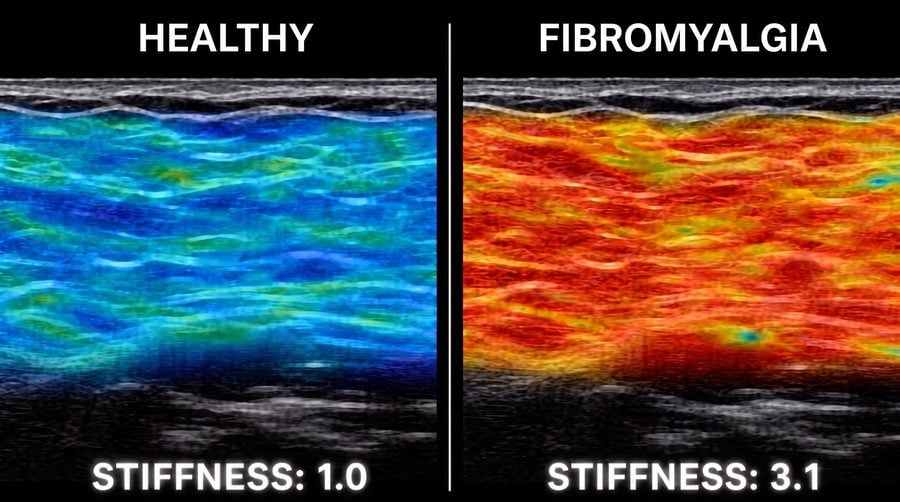
A series of imaging studies looked at one tissue that no normal fibromyalgia exam ever checks. They compared hundreds of women with fibromyalgia to hundreds of women without it.

In the women with fibromyalgia, this tissue was on average 76% denser.

Thicker. Stiffer. Drier.

And the stiffer it was, the more pain the woman was in.

The finding has now been repeated three times. It is the most talked-about news in my field this year.

Because it means that for the first time, fibromyalgia has a location. Something you can see on a scan.

It was never in your head. It was in your tissue.

Think back to when your pain started.

Was it after a virus that never quite let go? A surgery? A pregnancy, or a hysterectomy? A car accident? A year so hard your body never really came back from it?

Almost every woman I treat can name that moment. A “before” and an “after.”

For years, doctors called it a coincidence.

It wasn’t. That moment was the hidden trigger.

In a minute, I’ll show you what it set off in your body — and why it kept going after the trigger was gone.

My name is Dr. Emily Whitmore. I’m a rheumatologist, and for 15 years I have treated women with fibromyalgia.

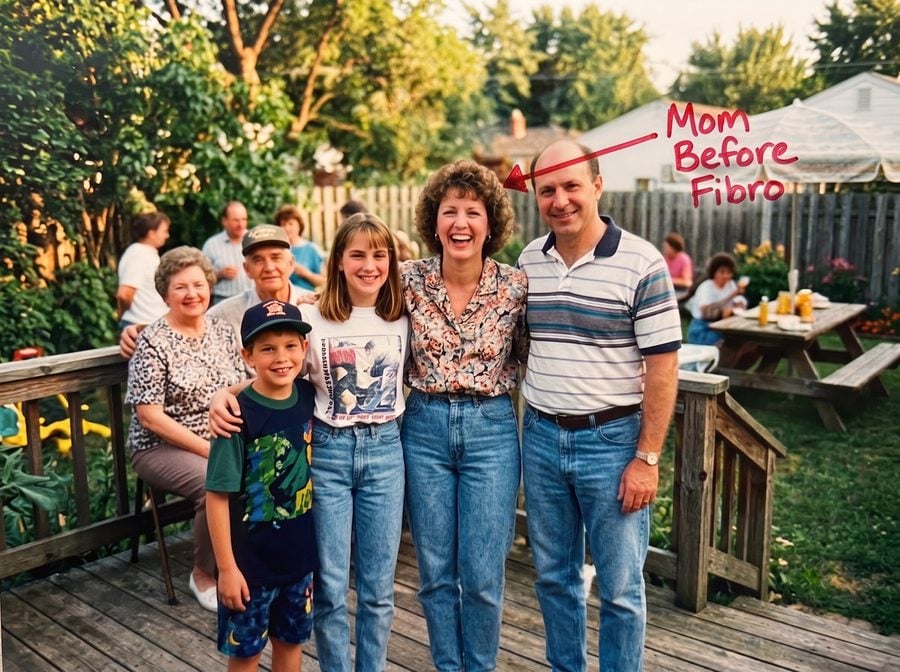
My mother had fibromyalgia. She was diagnosed in 1994, when many doctors still called it a fake disease. More than one told her to her face that she was making it up.

She stopped working in her fifties. A few years later, she stopped hosting the holidays. She died at 65 without ever finding anything that really helped.
Later, in the doctors’ workroom, I heard what some of my colleagues called women like her.

“Frequent flyer.” “One of those women.” “Bored housewife syndrome.”

I promised myself the next generation would get a real answer.

For most of my career, I didn’t have one. Now I do.
The Doctors Who Already Know

Here’s what most women haven’t heard yet.

The doctors who have studied these scans aren’t waiting for the rest of medicine to catch up.

More than 500 rheumatologists, pain specialists and rehab doctors — me included — are already giving their own patients something new.

Not a drug. A daily formula made to restore the exact tissue the scans found.

Your doctor probably hasn’t mentioned it. Most still treat fibromyalgia the way my mother’s doctors did in 1994 — with the same three drugs.

But first, I want you to understand what is really going on in your body. Because once you see it, so much of what you’ve lived with for years will finally make sense.

Does any of this sound like you?

“I’ve tried Lyrica, Cymbalta, the vitamins, every remedy out there. Nothing works.”

“I was brushed off for years. They said it was anxiety. My tests always came back normal.”

“I’m in my 40s or 50s, and I can’t tell what’s fibro and what’s menopause anymore.”

“I have arthritis too, but that doesn’t explain the pain all over. Everything hurts.”

If you nodded at even one of these, keep reading. The scans below explain why.

What the Scans Found: Fascia

The tissue is called fascia (you say it “FASH-ee-uh”).

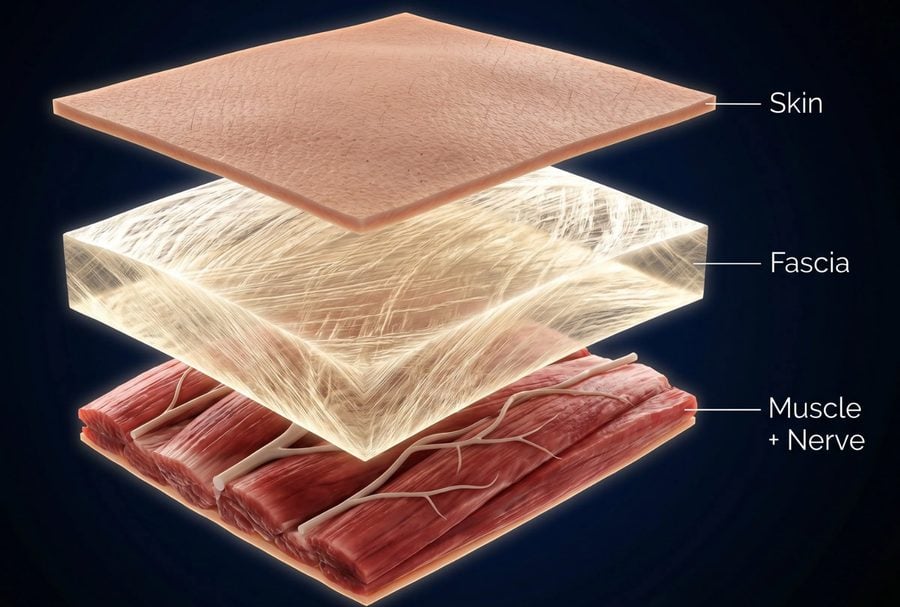
Fascia is a thin, wet layer that runs through your whole body in one piece. It sits just under your skin. It wraps every muscle, every nerve and every organ.

Think of the thin, clear film on a raw chicken breast. That’s fascia.

In medical school, we were told to cut it away and throw it out. Nobody thought it did anything.

We were wrong.

Healthy fascia is soft and full of water. It lets your muscles glide past each other. It cushions your nerves — and almost every pain nerve in your body runs right through it.

When your fascia is healthy, you never feel it. That’s how it’s supposed to be.

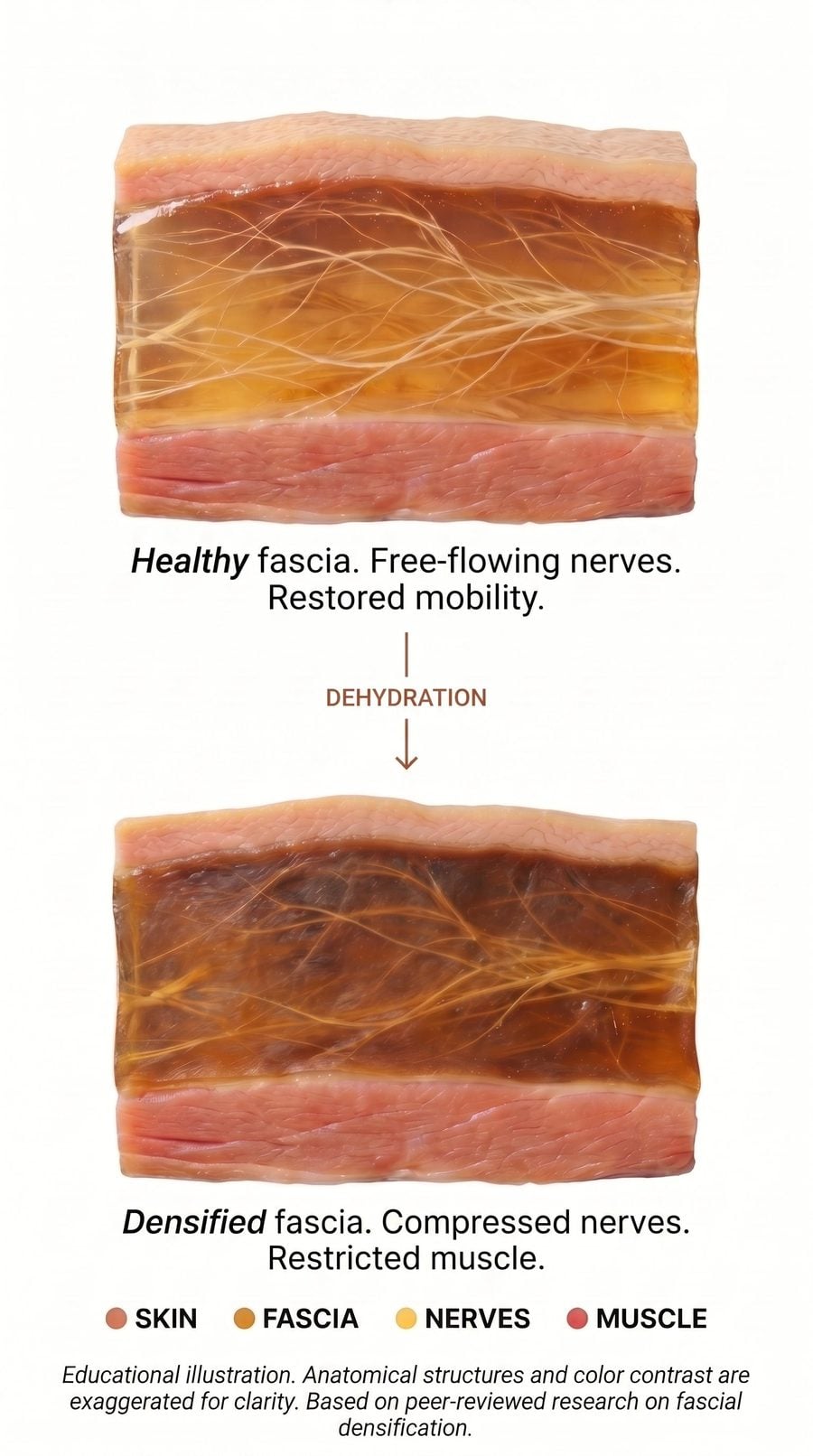
But in fibromyalgia, the fascia dries out.

The water leaves. The layers stop gliding. They thicken, harden and stick together. What should be soft and clear starts to look like old leather.

And now that hard layer presses on the nerves and muscles inside it. All day. All night.

Evidence Peer-Reviewed Findings
01 The Fibromyalgia Tissue Imaging Studies
Across a combined cohort of over 600 women with fibromyalgia and matched healthy controls, imaging studies have consistently found the muscle-and-fascia layer in the fibromyalgia group to be significantly denser, thicker, and stiffer than in controls — with the level of stiffness in each patient tracking directly with how much pain they were in.
Akan et al., Clinics, 2025 · Suarez-Rodriguez et al., Diagnostics, 2023
Evidence Peer-Reviewed Findings
02 The Densification Research
Recent studies have directly measured what happens to fascia when it densifies: it loses water, its internal structure hardens, and the whole layer becomes measurably stiffer.
Stecco et al., Bioengineering, 2022 · Hughes et al., J. Bodywork & Movement Therapies, 2019

My patients described this to me long before anyone had the scans.

“Like I’m stuck in cement.”

“Like I’m wearing a wetsuit two sizes too small.”

“Like someone beat me with a bat and then set me in concrete.”

Those were never strange things to say. They were exact. That is what dried-out, hardened fascia feels like from the inside.

Why Your Tests Always Came Back “Normal”

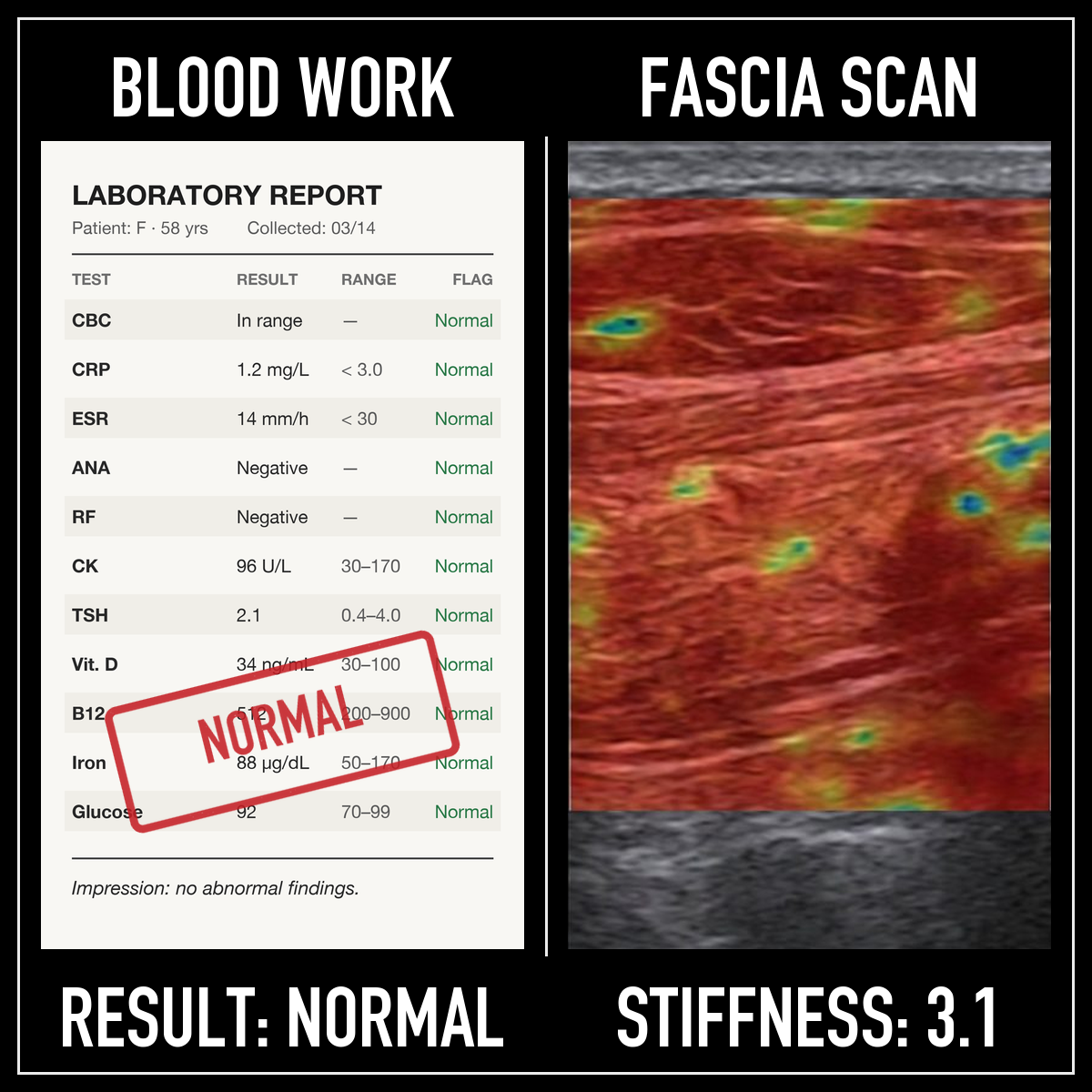
If you have fibromyalgia, you’ve had the blood work. The X-rays. Maybe an MRI.

And every time, you heard the same thing: “Everything looks normal.”

Here’s why.

Blood tests look for inflammation and autoimmune markers. X-rays look at bone. MRIs are read for joints, discs and nerves.

Not one of them is set up to check the state of your fascia.

And if an X-ray did find something — arthritis in your knees, your hands, your back — it only showed the joint, not the layer wrapped around it. That’s why it never explained the pain all over.

“Pain everywhere for +25 years; fibro and arthritis. I’m now 63 and people still don’t think I’m in as much pain as I am.” — Reader comment

So the tests weren’t wrong. They were looking in the wrong place.

“Normal” never meant nothing was wrong. It meant nobody checked.

Every Symptom Finally Makes Sense

Once you see what is happening in the fascia, the symptoms stop looking random.

They are not a hundred different problems. They are one problem, showing up in a hundred places.

01
Why the bedsheet feels like sandpaper
The symptom. Skin that hurts at the lightest touch. A bra seam. A seatbelt. Your husband’s hand on your back.

Why it happens. Healthy fascia is a cushion under your skin. It soaks up everyday touch before it reaches the pain nerves. When the fascia hardens, the cushion is gone. Every small touch presses right onto the nerves.
02
Why it’s worst after you rest
The symptom. You’d think a night in bed would help. Instead, mornings are the worst. You wake up stiff as a board. Your hands won’t close. The first steps to the bathroom feel like walking on planks of wood.

Why it happens. Fascia stays loose because you move. When you lie still for hours, the little water left in dried-out fascia thickens — like honey in a cold kitchen. By morning, the layers have set. That’s why it eases a little once you get going — and why it never fully lifts.
03
The exhaustion sleep won’t fix
The symptom. Eight hours in bed that feel like two. Feeling like you have the flu, all the time. One trip to the store, and you have to lie down for the rest of the day.

“I need to work to support my kids. The exhaustion is debilitating.” — Reader comment

Why it happens. Every move has to push through tissue that won’t give. At the same time, your brain is handling pain signals all night long. Real rest never comes. This isn’t laziness. It’s a body that has been fighting itself for years.
04
The brain fog
The symptom. The word that won’t come. The keys you can’t find. Names that slip away mid-sentence. And the quiet fear: is this the start of dementia?

Why it happens. Your brain will always put pain first. When it is flooded with pain signals day and night, there is less left for memory and focus. The fog is not a failing mind. It’s a mind that never gets a break.

What women notice when it starts to change:

“After 2 weeks, my fibromyalgia is nearly asleep. I feel amazing. Getting up in the morning feeling refreshed and able to walk without pain.” — Verified customer ✔

“For the first time in months, I do not wake every hour to turn over painfully. Except for one trip to the bathroom, I sleep all night. On waking, I am not as stiff and sore as I’m used to.” — Verified customer ✔

“Somewhere around the two-month mark I noticed the seatbelt didn’t bother me the way it used to, and then I realized I’d stopped bracing when my husband hugged me.” — Priya K. ✔

“About six weeks in I noticed I could actually follow a conversation without losing the thread halfway through.” — Rachel D. ✔

Every one of these symptoms leads back to the same tissue, in the same dried-out, hardened state.

So the real question is: how did the fascia get this way?

The Hidden Trigger, Explained

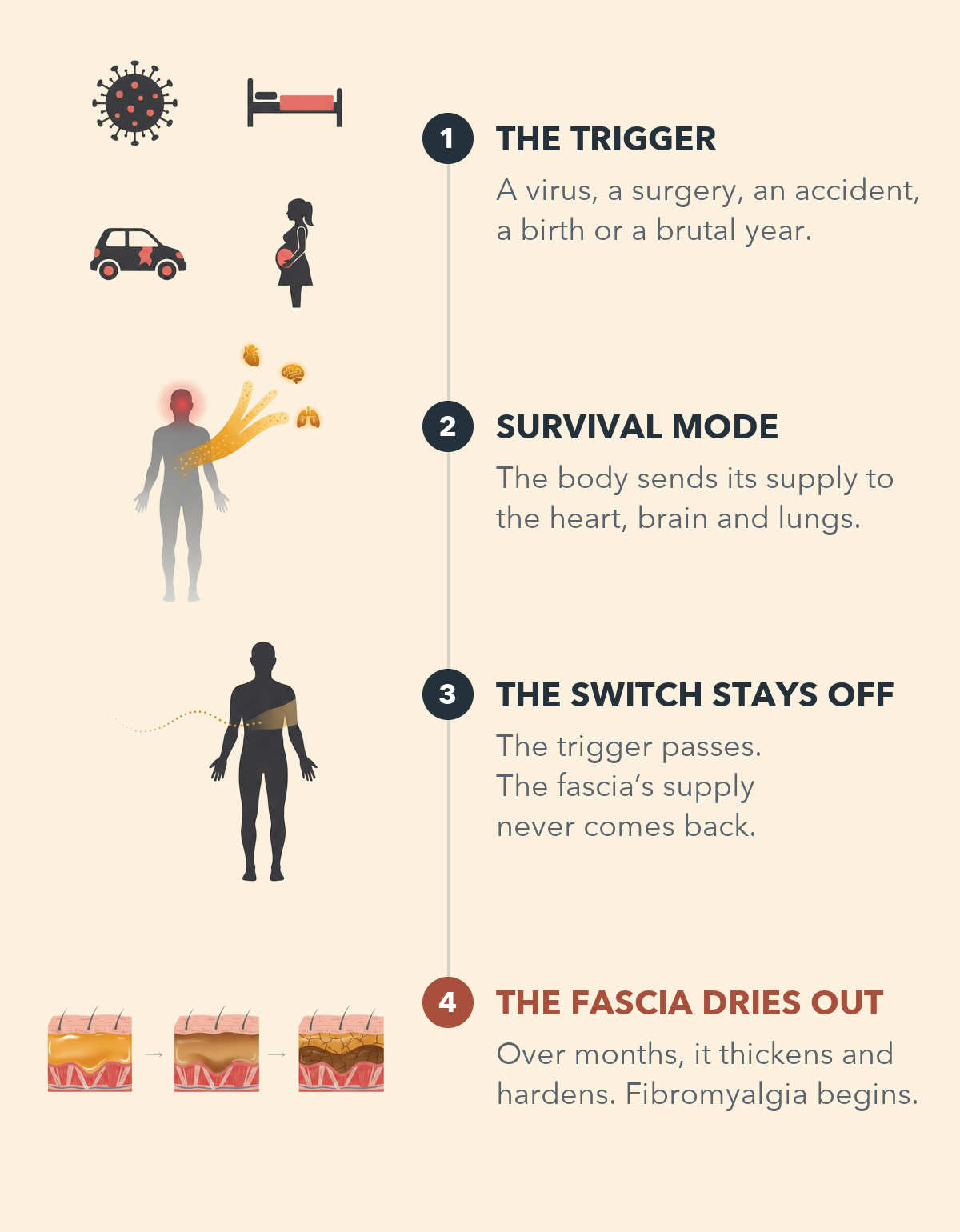
Remember that “before” and “after” moment? Here is what it did.

Your body has an old survival response. When it senses a serious threat — a virus, an injury, a surgery, a birth, months of heavy stress — it goes into survival mode.

It cuts back on food and water to the parts it doesn’t need right now. It sends what’s left to your heart, brain, lungs and immune system.

One of the first places to lose its supply is your fascia.

Evidence Peer-Reviewed Findings
03 The Stress-Response Research
Under sustained stress, the body redirects blood and nutrients away from non-essential tissues — reducing supply to those tissues to a fraction of normal — and prioritizes the organs it cannot afford to lose. In fibromyalgia patients specifically, this response has been documented to stay active long after the original trigger has passed.
Joyner & Casey, Physiological Reviews, 2015 · Martinez-Lavin, Arthritis Research & Therapy, 2007

In most people, this passes without a trace. The threat ends. The supply comes back. The fascia never dries out.

But in some women, the switch never flips back.

The virus is gone. The surgery has healed. The hard year is over. But the body never turns the supply to the fascia back on.

So month after month, the fascia goes underfed. Slowly, over months, it dries out, thickens and hardens.

That’s the moment fibromyalgia begins. And it’s why fibromyalgia so often gets worse over the years instead of better.

The trigger was never the virus or the accident. The hidden trigger is what they switched off.

Why It Hits Women Harder

This is also why fibromyalgia hits women about nine times more often than men. Studies show women’s fascia holds far more pain nerves per inch — so the same hardened tissue hurts far more.

And if your pain got worse in your 40s or 50s, you were probably told it’s just menopause. Menopause can make everything louder. But it doesn’t explain the stiffness, the pain all over, or skin that hurts at the lightest touch. Your fascia does.

“So many of the symptoms overlap between menopause and fibro I’m just not sure if I have both. Doctors and hrt aren’t much help.” — Reader comment

Why the Drugs, the Massages and the Supplements Didn’t Hold

If you’ve had fibromyalgia for a while, you’ve tried a lot. Here’s why none of it lasted.

The drugs. Cymbalta, Lyrica, Savella, gabapentin. Each one is an antidepressant or a pain drug. They turn down the alarm. They don’t touch the fascia. That’s why so many of my patients say the same thing:

“It helped a little. It didn’t hold. And I feel worse when I stop.”

And for many of them, the drugs left something behind: the side effects. The weight gain. One woman wrote it simply:

“Was on gabapentin, than Lyrica. The only thing they did was cause tremendous weight gain.” — Reader comment

Massage and myofascial release. These feel good because they work on the fascia from the outside. Many massage therapists have known for years that fascia and fibromyalgia are linked. But pressure can’t put water back into tissue that isn’t being fed. A few days later, it hardens again.

“I’m a PT and I have fibromyalgia. I know about myofascial release and I knew the fascia was involved. I’m super skeptical, but I’m going to try and see if this works. If it does, it will LITERALLY change my life.” — Verified customer, 49 ✔

“Just drink more water.” You probably already do. Many women drink glass after glass and still feel “so dry I might crack.” The water isn’t the problem. The tissue has lost the ability to hold it.

The supplement guessing game. Magnesium. Turmeric. Vitamin D. Collagen. One bottle at a time, hoping. None of them was made to rehydrate fascia.

So it was never that you didn’t try hard enough.

You tried everything — except the one thing that was actually broken.

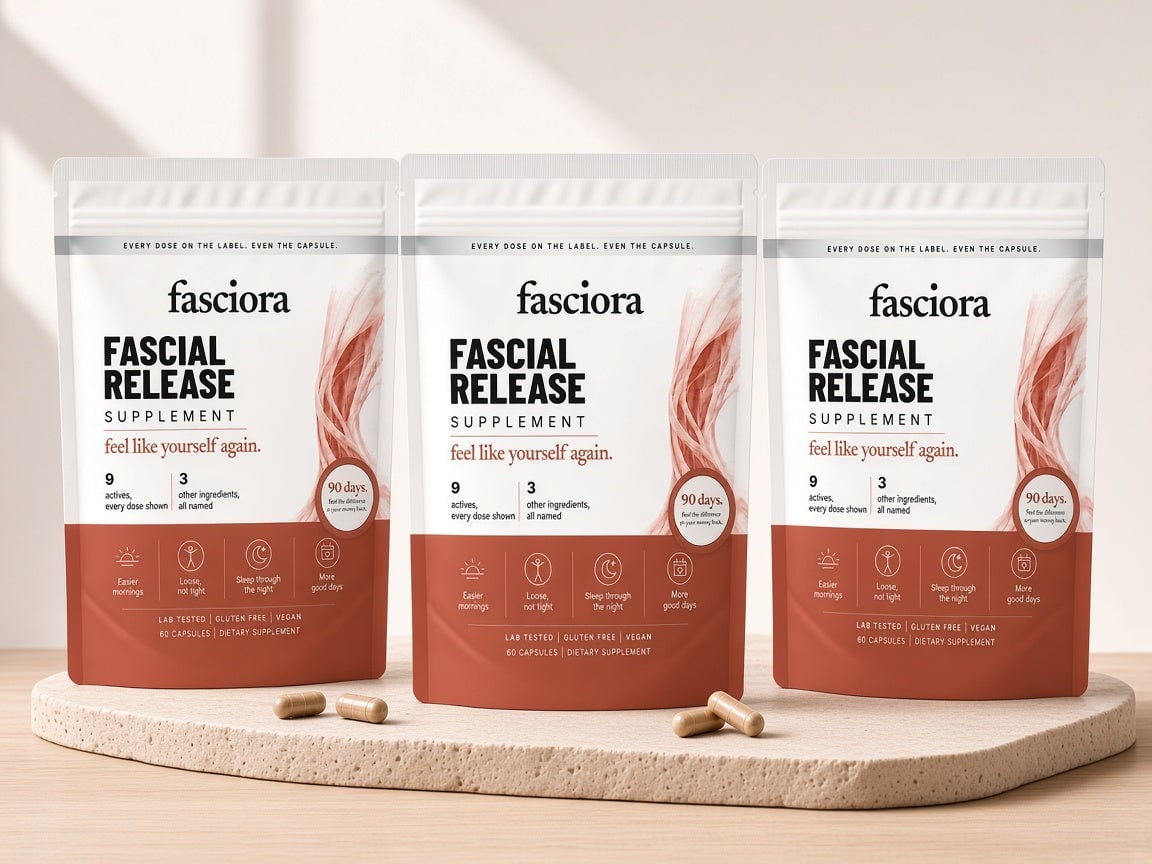
The Missing Piece: Fasciora®

If dried-out fascia is the problem, the fix is clear. Not to numb the pain it causes. To rehydrate the fascia itself.

The trouble was, until recently, nobody had studied what fascia needs to do that.

About 18 months ago, a small group of fibromyalgia researchers and fascia specialists set out to answer that question. They founded a company called Fasciora. Its first project: the first formula made just to rehydrate hardened fascia.

Some of the ingredients already had research behind them from other fields. Others had never been tested this way, so the team ran their own trials.

The result is called Fasciora®.

The first time I read the label, I was surprised by how little it looked like anything in my patients’ medicine cabinets.

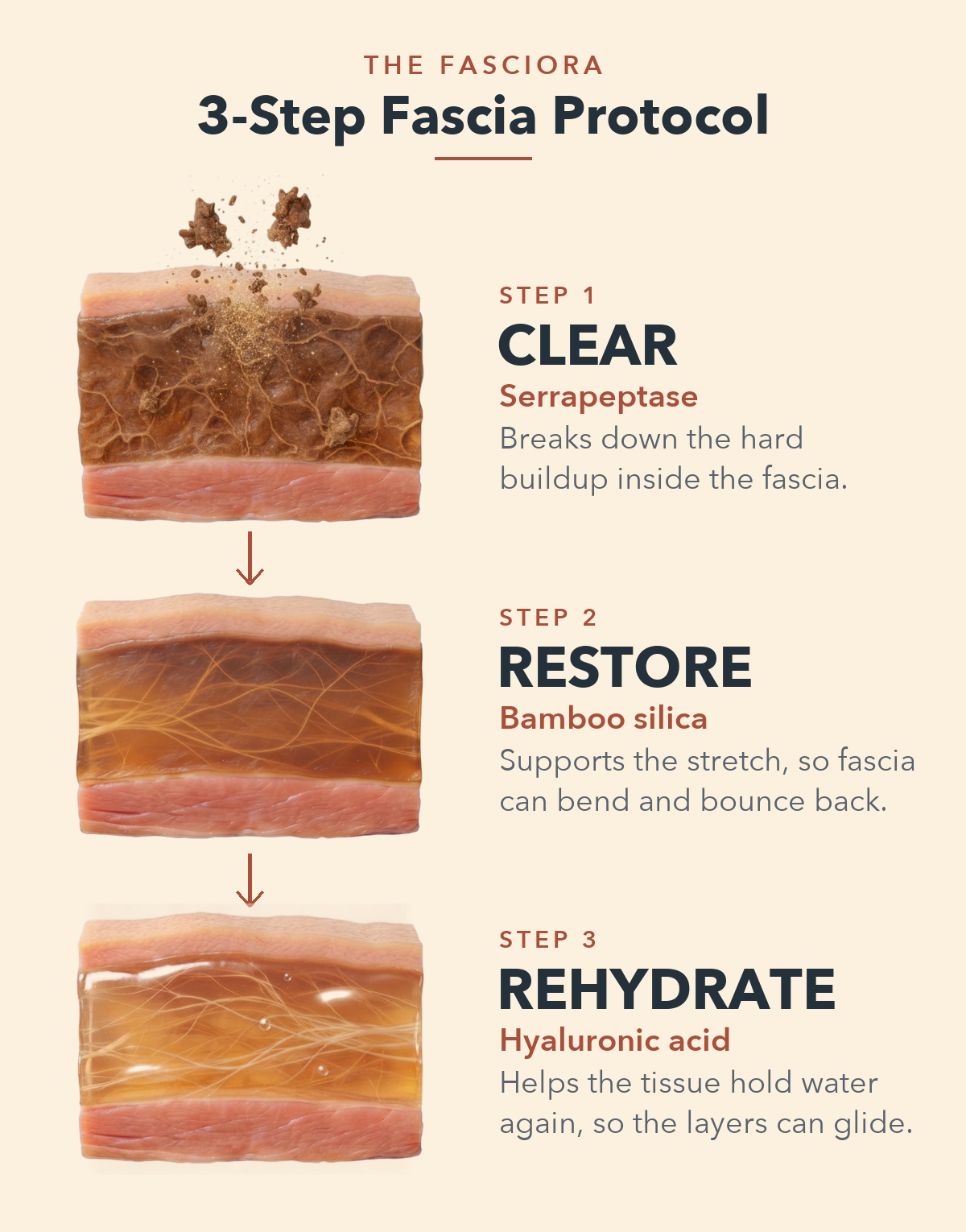
It’s not an antidepressant. It’s not a pain drug. It doesn’t numb anything. It works in three steps:

Step 1 — CLEAR. Serrapeptase, a natural enzyme, helps break down the hard buildup inside the fascia. It clears the way so the rest of the formula can reach the tissue.

Step 2 — RESTORE. Bamboo silica, with manganese and boron, supports the stretch of the fascia — the part that lets it bend and bounce back.

Step 3 — REHYDRATE. Hyaluronic acid is the molecule fascia uses to hold water. It helps the tissue take up water again, so the layers can glide.

Behind those three: pine bark, grape seed, boswellia and gotu kola, to support the tissue while it recovers.

The order matters. You can’t rehydrate tissue that’s still clogged. That’s why it’s one formula — not five bottles from the supplement aisle.

The Results From Real Women

In late 2025, Fasciora followed a group of women with fibromyalgia taking Fasciora® for 90 days.

66%
of participants reported a measurable reduction in flare-ups and fibromyalgia-related pain by week four
73%
of participants reported a noticeable reduction in fibro fog and cognitive symptoms by week eight
71%
of participants reported deeper, more restorative sleep by week eight
84%
of participants reported a meaningful reduction in widespread pain by week ten
And the number that surprised the researchers most:
74%
of the women in the cohort reported feeling like themselves again by day 90.
Not marginal. Not incremental. A version of themselves they hadn't felt in years.
Every response came from a real woman filling out a form on her phone, in her own words, on her own time.
90-Day Money-Back Guarantee
Check Availability →

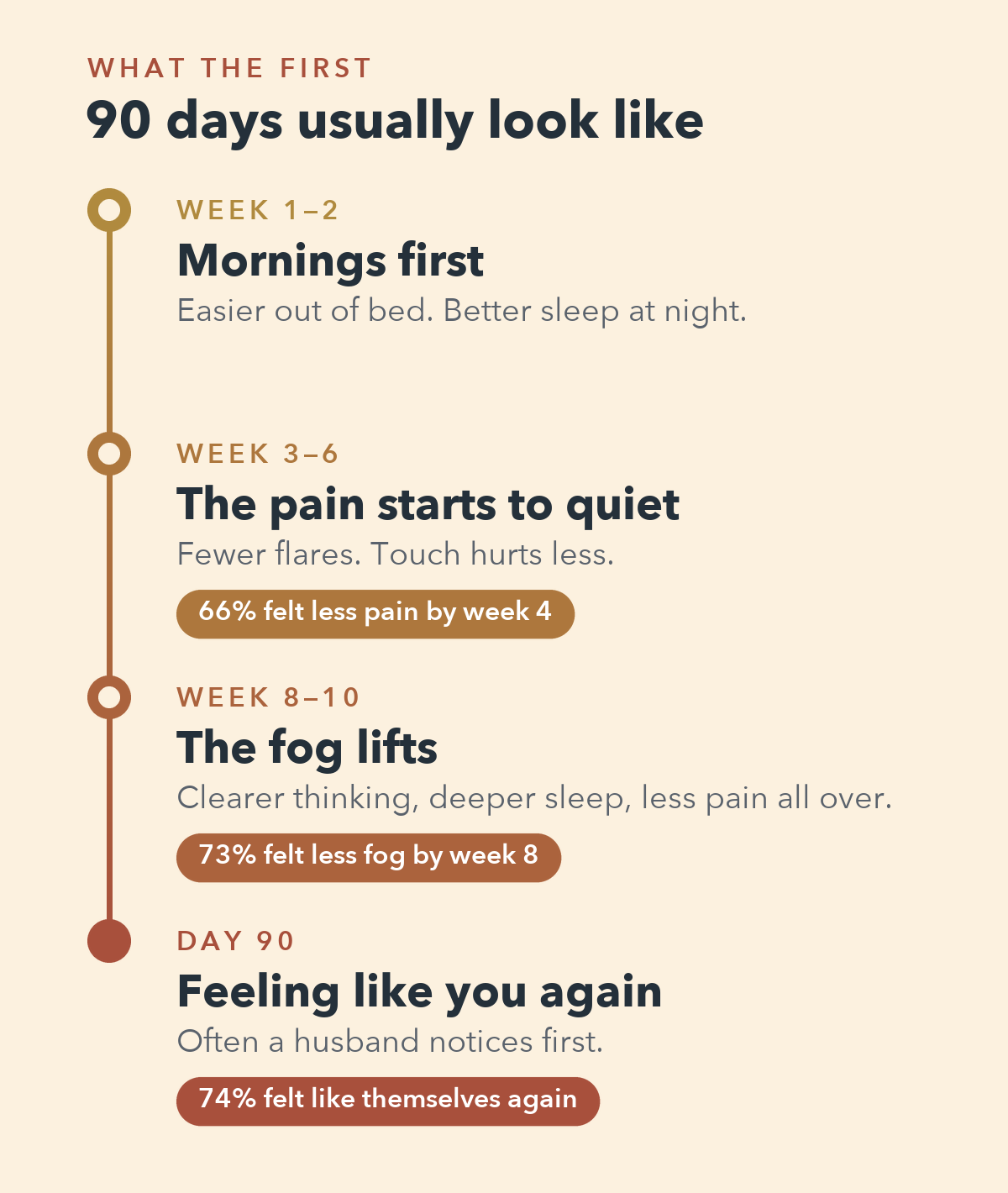
What the First 90 Days Usually Look Like

Some women feel nothing in the first week or two. That’s normal — the fascia takes time. Often, someone else notices first: usually a husband who says he’s seeing bits of the woman he married.

“I Didn’t Believe It Either”

“I let it sit in the drawer for two weeks before I even started it because I didn’t want to get my hopes up again. I’m glad I finally did. I am back to my morning walks, I am keeping up with my grandkids, and I wake up looking forward to the day instead of dreading it.” — Gloria M., 68 ✔

“Eight doctors told me it was anxiety. Not one of them looked at my fascia.” — Linda, 57 ✔

“I skeptically decided to try one month myself. We all have to go through a myriad of drugs and therapies. So I was about to give up, and then at day 20 I felt better.” — Verified customer ✔

“I’ve been on this product about a month. So far I sleep better and my nightly pain level has decreased. I’ll continue to take it for the 90-day trial period and see where I’m at then.” — Verified customer ✔

What I’ve Seen in My Own Practice

When I saw those numbers, I did something I had never done as a doctor. I applied to become a partner practitioner, so I could offer Fasciora® to my own patients.

I’ve been doing that for close to a year now. It’s the first thing in 15 years that has changed what my follow-up visits look like.

Women who had tried everything come back after six, eight, twelve weeks and tell me about things they hadn’t felt in years.

Pain that has gone quiet. Fog that has lifted. Sleep that actually helps. Skin that doesn’t flinch when it’s touched.

Not every woman responds the same way. Some feel it in the first month. Others closer to the third.

But most of the women I’ve put on it are getting back a version of themselves they had stopped believing in.

My mother never got that chance. That’s why I’m writing this.

The Protocol
Two capsules a day. That's it.
One in the morning, one at night, with food. No diet. No stack of pills. Nothing to track.
No injections No specialists No prescription No diet rules No timing
Manufactured in an FDA-registered, GMP-certified facility · Third-party tested · Fully vegan · No fillers

Safe With Your Current Medications

Fasciora® is compatible with every major fibromyalgia medication — Lyrica, Cymbalta, Savella, and LDN included. Because the formulation is made entirely from natural ingredients, there are no known interactions, and no need to come off anything to begin. Most of the women I have put on it start Fasciora® while still on their current prescriptions, then taper down over time as the fascia responds.

Most fibromyalgia interventions ask women to overhaul their lives to get a marginal result. Fasciora® asks for two capsules a day.

90-Day Money-Back Guarantee
Check Availability →

5 Questions Women Ask Me First

“I’ve had fibromyalgia for 20 or 30 years. Isn’t it too late for me?”

This is the question I hear most. Fascia is living tissue. It is never “finished.” It responds to what it is fed, at any age and after any number of years. Some of the women in my practice have lived with this for three decades. Still, starting sooner is better — every month the fascia stays underfed, it hardens a little more. Today it is as easy to rehydrate as it will ever be.

“I’ve tried everything. Why would this be different?”

Because everything you tried worked on the pain signal, or on the fascia from the outside. Fasciora® is the first thing made to feed the fascia from the inside. And you don’t have to take my word for it — you have 90 days to find out, with your money back if it doesn’t work for you.

“Can I take it with my medications?”

Yes. It works alongside Lyrica, Cymbalta, Savella, LDN and the rest. You don’t need to stop anything to start.

“How fast will I feel something?”

Most women notice mornings and sleep first, often in the first two weeks. Pain usually follows by weeks 3 to 6. Give it the full 90 days — that’s how long the study ran.

“I’d like to show this to my doctor first. Is that okay?”

Please do. A good doctor will be glad you’re asking about the tissue the scans found. Many of my patients bring this article to their next visit. And because it works alongside your current medications, there’s nothing you need to stop while you talk it over.

90 Days or Your Money Back

I tell my patients to try this because the company makes it easy.

Take Fasciora® for the full 90 days. If you don’t feel a real difference, you get your money back. That’s the 90-day money-back guarantee.

That’s the same 90 days the study covered — the window in which most women saw their pain, stiffness, fatigue and fog improve.

90 days or your money back. The only thing you risk is staying where you are.

90-Day Money-Back Guarantee
Check Availability →

From Women Who Had Given Up on Feeling Better

Everything I’ve told you about what I’ve seen in my own practice is also what women who found Fasciora® on their own have been reporting.

★★★★★
Verified purchases · 4.9 / 5 average rating
Rachel D.
Rachel D.
★★★★★
Didn't expect the fog to lift
05/22/2026
✔ Verified Purchase
Everyone talks about the pain but for me the worst part was always the brain fog. I'm a paralegal and there were days I'd read the same paragraph four times and still not hold onto it. I started missing things at work and it scared me.

I've been on this since February. The aching is better too, but the brain fog is what shocked me. About six weeks in I noticed I could actually follow a conversation without losing the thread halfway through. My head feels clearer than it has in years. That alone is worth every penny to me.
Gloria M.
Gloria M.
★★★★★
68 and finally getting relief
06/17/2026
✔ Verified Purchase
I've had this since my fifties and I'd honestly made peace with the idea that this was just how the rest of my life was going to feel. My daughter found this and ordered it for me. I let it sit in the drawer for two weeks before I even started it because I didn't want to get my hopes up again.

I'm glad I finally did. I cannot stop telling people about it. I am back to my morning walks, I am keeping up with my grandkids, and I wake up looking forward to the day instead of dreading it. At my age I did not think anything could shift this much. I was wrong, and I have never been so happy to be wrong in my life.
Priya K.
Priya K.
★★★★★
The touch sensitivity is so much better
06/13/2026
✔ Verified Purchase
I don't know if this happens to everyone but for me even light things hurt. My husband putting his hand on my back, the seatbelt, certain fabrics against my skin. It made me flinch away from people I love and I hated that about my life.

Started this in March. Somewhere around the two month mark I noticed the seatbelt didn't bother me the way it used to, and then I realized I'd stopped bracing when my husband hugged me. It's hard to describe how much that means. I can be close to people again without my skin fighting me on it.

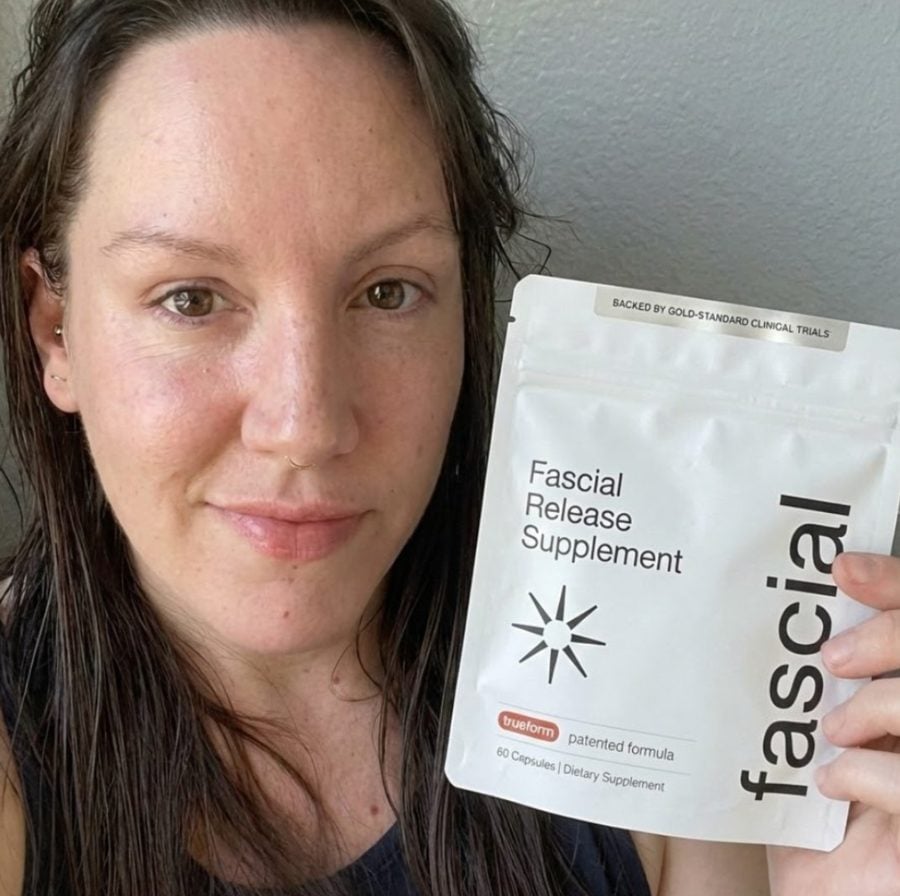
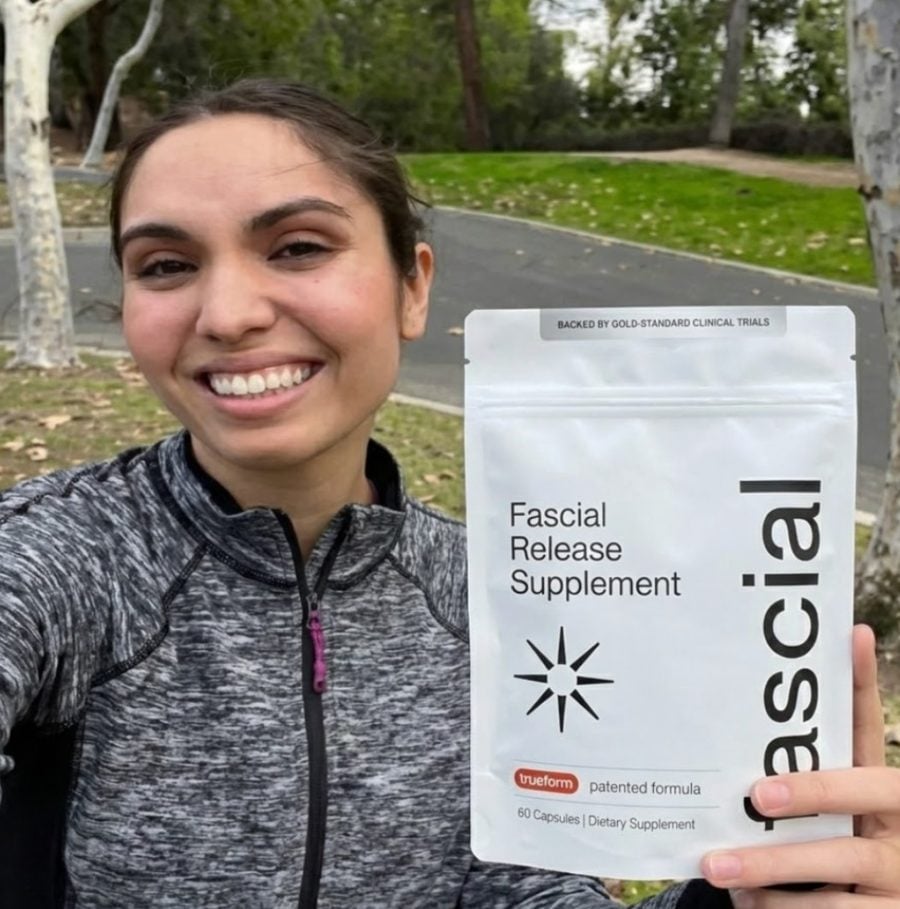
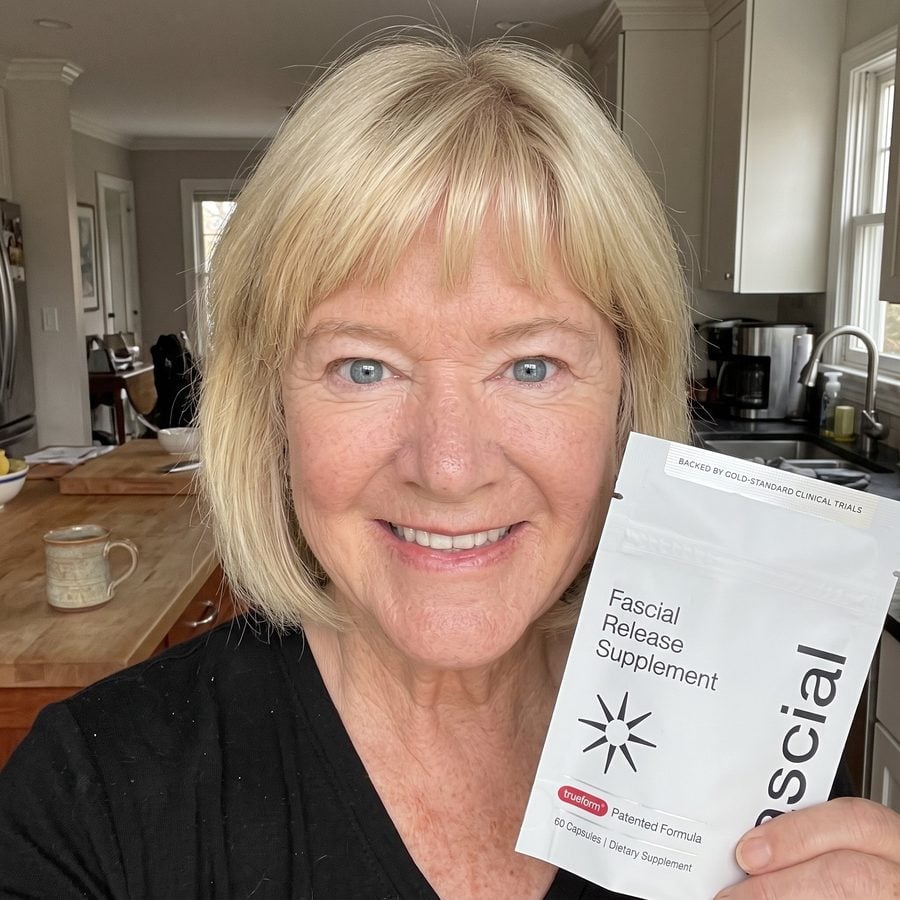
“After 48 years of struggle, numerous doctors who didn’t know, after going down so many rabbit holes, trying so many snake oil products… I may have found my answer! It makes more sense than ANYTHING! Here we go, Fascial Release Supplement!” — Verified customer ✔

“I’ve been taking this twice a day for 4 days and I’m seeing a significant difference. I have clarity again. I still have occasional brain fog, but I have clarity and focus more often. The fatigue is almost completely gone. Pain is slowly getting better.” — Verified customer ✔

“My husband said he can finally see bits of the old me.” — Verified customer ✔

Limited Supply

Why Fasciora® sometimes sells out

Remember the 500+ doctors I mentioned at the start?

Fasciora® is made in small batches in an FDA-registered, GMP-certified facility. Part of every batch is held back for those doctors and their patients first — mine included. Whatever is left goes to the public, first come, first served.

When a batch sells out, the next one takes six to eight weeks. And women already on the protocol get the restock before new customers.

So if it’s in stock today, this is your chance to start.

90-Day Money-Back Guarantee
Secure Checkout
Third-Party Tested
FDA-Registered Facility

Most women choose the 150-day supply. It takes you past the full 90 days the study covered.

90 days or your money back

90-Day Money-Back Guarantee
Check Availability →

You Have Two Choices Now

Choice one: close this page and keep going as you are. The same three drugs. The same “normal” tests. The same mornings. And the fascia keeps hardening a little more every month.

Choice two: give your fascia what it stopped getting, for 90 days. If you don’t feel a real difference, you get your money back.

My mother never had a second choice. You do.

90-Day Money-Back Guarantee
Check Availability →

— Dr. Emily Whitmore, MD

P.S. If you’re thinking “I’ve had this too long” — that’s what almost every woman in my practice thought before she started. Your fascia is living tissue. It doesn’t care how many years it has been. It only cares what it is fed, starting today. You have 90 days to see for yourself, or your money back.

Important — Please Read

Fasciora® Is Not Sold on Amazon

Fasciora® is only available at fasciorahealth.com. If it shows up anywhere else, it isn’t the real thing. Here’s what’s going on:

  • Scammers have listed fake “Fasciora® supplements” on Amazon copying the name and logo.
  • These fakes don’t contain the real Fasciora® formula.
  • Many are never shipped at all — buyers are charged and receive nothing.
  • Unfortunately, real customers have already been scammed this way.
  • Fasciora is actively working to get these listings removed.

The real Fasciora® — made in an FDA-registered, GMP-certified facility and third-party tested — is sold in one place only: fasciorahealth.com

90-Day Money-Back Guarantee
Check Availability →
Fasciora® Fascial Release90-day money-back guarantee
Check Availability